
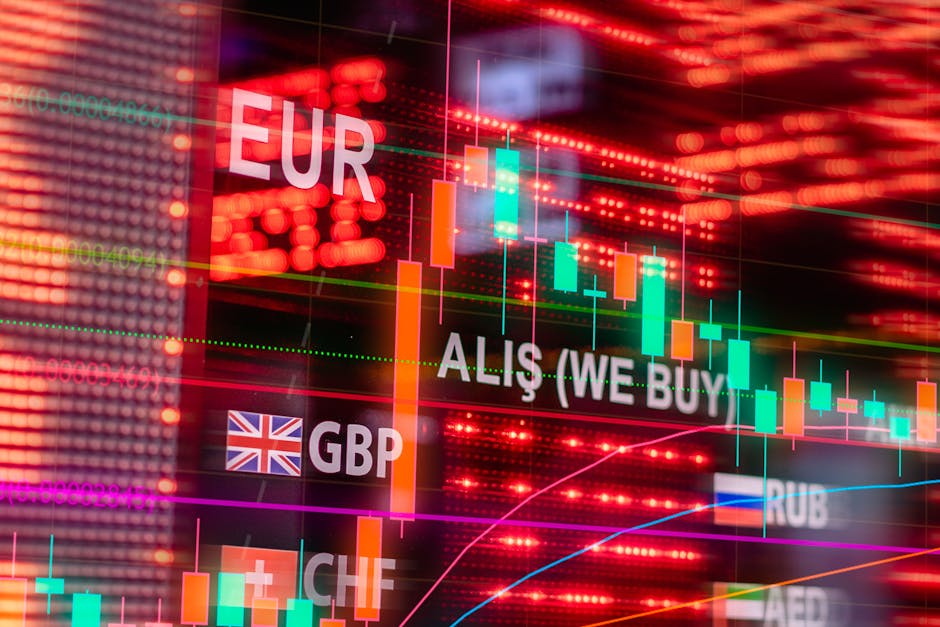
What Is Forex Trading? Beginner’s Guide | ZenithFX
Welcome to the World’s Largest Financial Market
Every day, trillions of dollars change hands in the foreign exchange market — commonly known as forex. Whether you have heard about it from a friend, seen it mentioned online, or stumbled across a trading chart for the first time, forex can seem like a complex world reserved for banks and financial institutions. The truth is, the forex market is accessible to everyday individuals around the globe, and with the right education and preparation, anyone can learn how it works. This beginner’s guide will walk you through the essential foundations you need to understand before placing your first trade.
What Is Forex Trading?
Forex trading is the process of buying one currency while simultaneously selling another. Currencies are always traded in pairs — for example, the Euro against the US Dollar (EUR/USD) or the British Pound against the Japanese Yen (GBP/JPY). The goal is to profit from changes in the exchange rate between those two currencies. If you believe the Euro will strengthen against the Dollar, you would buy EUR/USD. If the rate moves in your favour, you can sell the pair at a higher price and make a profit.
The forex market operates 24 hours a day, five days a week, across major financial centres including London, New York, Tokyo, and Sydney. Because these centres are spread across different time zones, trading activity flows continuously from one region to the next. This around-the-clock availability is one of the features that makes forex trading attractive to people who want flexibility in when they trade.
Key Terms Every Beginner Should Know
Before you can understand how trades work, you need to become familiar with a few important terms. These words will appear in nearly every article, chart, and trading platform you encounter, so learning them early will make everything else much easier to grasp.
- Currency Pair: The two currencies involved in a trade, such as EUR/USD or USD/JPY.
- Base Currency: The first currency listed in a pair. In EUR/USD, the Euro is the base currency.
- Quote Currency: The second currency in a pair. In EUR/USD, the US Dollar is the quote currency.
- Pip: The smallest standard price movement in a currency pair, typically the fourth decimal place.
- Spread: The difference between the buy price and the sell price of a currency pair — this is how brokers are typically compensated.
- Leverage: A tool that allows you to control a larger trade position with a smaller amount of capital. While leverage can increase potential gains, it also significantly increases potential losses.
- Lot: The standard unit of measurement for trade size in forex. A standard lot equals 100,000 units of the base currency.
Understanding these terms is your first step toward reading charts, analysing price movements, and making informed trading decisions. Do not rush this stage — a solid grasp of the basics will support everything you learn later.
How Does a Forex Trade Actually Work?
Let’s walk through a simple example. Suppose the EUR/USD exchange rate is 1.1000. This means one Euro buys 1.10 US Dollars. You believe the Euro is about to strengthen, so you buy EUR/USD. A few hours later, the rate moves to 1.1050. You decide to close your trade and sell. The difference — 50 pips — represents your profit on that trade.
Of course, markets do not always move in the direction you expect. If the rate had dropped to 1.0950 instead, you would have experienced a loss of 50 pips. This is why risk management is one of the most critical skills in forex trading. Successful traders do not focus only on finding winning trades — they focus equally on limiting the damage when trades go against them. Tools like stop-loss orders, which automatically close a trade at a predetermined level, are essential for protecting your capital.
What Moves Currency Prices?
Currency prices are constantly moving because they reflect the ongoing relationship between supply and demand for each currency. Many different factors influence this balance, and understanding them is a key part of becoming a more informed trader. The main drivers include economic data releases, central bank decisions, and broader market sentiment.
Economic indicators such as inflation reports, employment figures, and gross domestic product (GDP) data give traders insight into the health of a country’s economy. A strong economy generally supports a stronger currency. Central banks — such as the US Federal Reserve or the European Central Bank — play a major role by setting interest rates. When interest rates rise, a currency often strengthens because it attracts more investment. When rates fall, a currency can weaken. Political events, trade agreements, and global crises can also create sharp price movements in the forex market.
Traders use two main types of analysis to predict price movements. Fundamental analysis focuses on economic and political factors, while technical analysis uses historical price charts and patterns to identify potential future movements. Many experienced traders combine both approaches to form a well-rounded view of the market.
Understanding Risk in Forex Trading
Forex trading carries real financial risk, and it is important to acknowledge this clearly from the start. No strategy or tool can guarantee profits, and even experienced traders face losing periods. The use of leverage, while powerful, means that losses can exceed your initial deposit if trades are not managed carefully. This is why reputable brokers and educators always emphasise the importance of responsible trading.
New traders are encouraged to start small, trade with money they can afford to lose, and never risk more than a small percentage of their account on a single trade. Developing a clear trading plan — one that outlines your goals, risk tolerance, and rules for entering and exiting trades — can help you stay disciplined and avoid emotionally driven decisions. Patience and consistency matter far more than trying to make large profits quickly.
How to Get Started with Forex Trading
The best way to begin your forex journey is through education and practice. Read widely, watch how currency pairs behave in different market conditions, and study the basics of chart reading and analysis. Avoid the temptation to jump straight into live trading before you understand the fundamentals. Most professional traders will tell you that the learning phase is one of the most important investments you can make.
Once you feel comfortable with the concepts, a demo trading account is an excellent way to practice in real market conditions without risking any real money. Demo accounts replicate live market prices and allow you to test your strategies, build confidence, and develop good habits before committing your own capital. Platforms like ZenithFX.com provide demo accounts designed specifically for beginners who want to learn in a risk-free environment.
Start Your Trading Journey Today
Forex trading is a skill that takes time, dedication, and ongoing learning to develop. There are no shortcuts, and anyone promising guaranteed returns should be treated with caution. However, for those willing to invest in their education and approach the market with discipline and realistic expectations, forex trading can become a rewarding and intellectually stimulating pursuit.
You now have a foundation to build on. You understand what forex is, how trades work, what drives price movements, and why risk management is so important. The next step is to put that knowledge into practice in a safe environment. Open a free demo account at ZenithFX.com today and start practising your trades with no financial risk. Take your time, keep learning, and build the skills that every successful trader depends on.
🎓 Free Forex Education at ZenithFX
Access our full learning center — forex basics, advanced strategies, video tutorials, and live webinars. All completely free.
Leave a comment