
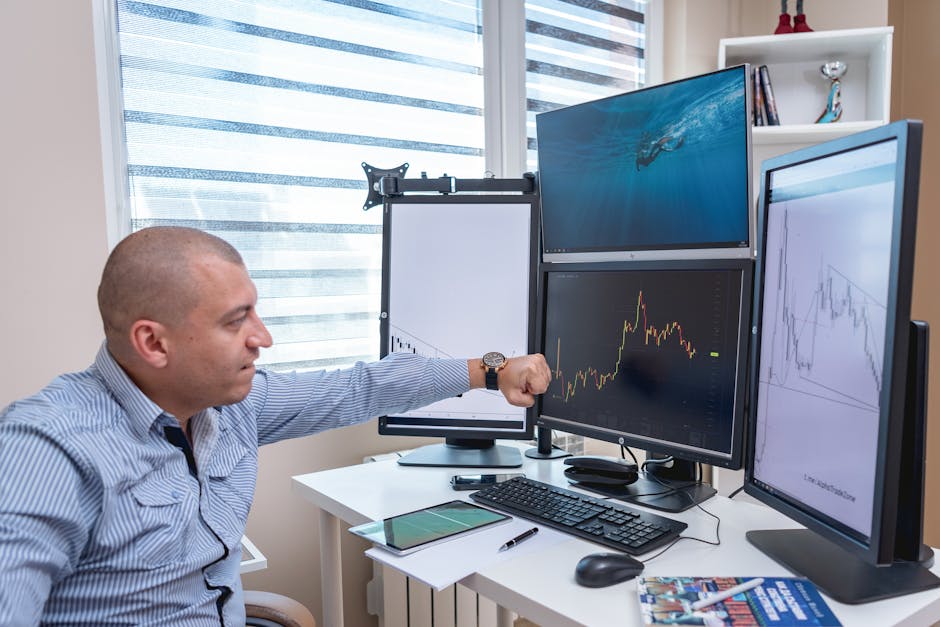
Forex Market Hours: When Can You Trade?
One of the first things every new forex trader needs to understand is that the forex market does not follow a standard nine-to-five schedule. Unlike stock exchanges that open and close at fixed times, the forex market runs continuously from Monday morning to Friday evening. This non-stop nature is one of the biggest advantages forex offers over other financial markets. However, not all hours are created equal. Knowing when the market is most active — and when it tends to slow down — can make a real difference to your trading results.
How the 24-Hour Forex Market Works
The forex market stays open around the clock because it operates through a global network of banks, financial institutions, and individual traders rather than a single centralized exchange. When one major financial center closes for the day, another one is just opening. This creates a continuous chain of trading activity that spans the entire globe.
The market officially opens at the start of the Sydney session on Monday morning and closes when the New York session ends on Friday evening. Outside of this window, the market is essentially closed over the weekend, and trading volumes drop significantly. Some brokers may offer limited weekend trading on certain instruments, but for standard forex pairs, the five-day trading week is the norm.
It is worth noting that even though the market is technically open for much of the day, price movement and trading volume are not consistent throughout those hours. The best opportunities tend to appear during specific windows when large amounts of money are changing hands.
The Four Major Trading Sessions
Forex traders typically divide the trading day into four main sessions, each named after a major global financial center. These are the Sydney session, the Tokyo session, the London session, and the New York session. Each session has its own character, and the currency pairs that tend to move most will vary depending on which session is active.
The Sydney session opens first and is generally the quietest of the four. The Tokyo session follows and brings more activity, particularly in pairs involving the Japanese yen and other Asia-Pacific currencies. The London session is widely considered the most important, as London remains one of the world’s largest foreign exchange centers. Finally, the New York session brings significant volume as North American traders enter the market.
Each session runs for roughly eight hours, though the exact times shift slightly depending on daylight saving time changes in different countries. Keeping a world clock or a forex session clock handy is a practical habit for any active trader.
When Sessions Overlap
The most active and volatile periods in the forex market occur when two major sessions are open at the same time. These overlaps create a surge in trading volume because participants from two major financial regions are active simultaneously. More volume typically means tighter spreads and more defined price moves.
The most significant overlap happens between the London and New York sessions, which coincide for several hours during the afternoon in Europe and the morning in North America. This window is widely regarded as the best time to trade major currency pairs like EUR/USD, GBP/USD, and USD/JPY. The combination of high liquidity and strong price movement makes this period attractive to both short-term and swing traders.
A smaller but still notable overlap occurs between the Sydney and Tokyo sessions. This period tends to see increased activity in pairs involving the Australian dollar, New Zealand dollar, and Japanese yen. While it is less dramatic than the London-New York overlap, it can still offer solid trading conditions for those focused on Asia-Pacific currencies.
The Quieter Hours and What They Mean for Traders
Understanding when the market slows down is just as important as knowing when it heats up. The hours between the close of the New York session and the open of the Sydney session represent the quietest period in forex trading. During this window, spreads can widen, price movements can become erratic, and liquidity is thin.
Trading during low-liquidity hours carries specific risks. Thin markets can lead to sharp, unpredictable price spikes that may trigger stop-loss orders unexpectedly. News events that hit during off-hours can cause outsized moves simply because there are fewer participants to absorb the impact. For most traders, especially beginners, it is wise to avoid placing new trades during these quiet periods.
The middle of the Tokyo session, particularly when neither London nor New York is open, also tends to see slower movement in non-yen pairs. Experienced traders sometimes use these quieter hours for analysis and planning rather than active trading.
How to Choose the Best Times to Trade
The right trading hours depend on several factors, including the currency pairs you trade, your strategy, and your personal schedule. There is no single answer that works for every trader. However, there are some general guidelines worth keeping in mind.
- Trade major pairs during peak hours: EUR/USD, GBP/USD, and USD/JPY tend to perform best during the London and New York sessions or their overlap.
- Match your session to your currency pair: If you trade AUD/JPY or NZD/USD, the Asian session will be more relevant to you.
- Avoid trading right before major news events if your strategy is not built around news trading, as volatility can spike without warning.
- Be aware of Sunday evening gaps: When the market reopens after the weekend, prices can gap from where they closed on Friday.
- Consider your time zone: There is no point forcing yourself to trade at 3am if your strategy requires focus and sharp decision-making.
Building a routine around the sessions most relevant to your strategy will help you trade more consistently over time. Many successful traders focus on just one or two sessions rather than trying to monitor the market around the clock.
Economic Events and Their Impact on Market Hours
Beyond the regular session schedule, high-impact economic data releases can dramatically change market conditions at specific times. Reports such as Non-Farm Payrolls from the United States, interest rate decisions from central banks, and inflation data from major economies can create powerful moves that override normal session patterns.
These events are published in advance on economic calendars, which are widely available online. Checking the economic calendar before you start your trading day is a simple habit that can help you prepare for potential volatility or decide to step aside entirely. Some traders build strategies specifically around these events, while others prefer to stay out of the market until the dust settles.
Understanding how scheduled news events interact with trading sessions adds another layer of context to your market awareness. A data release during the London-New York overlap, for example, will typically have a much larger immediate impact than the same release during the quiet Asian hours.
Start Practicing With a Free Demo Account
Understanding market hours is fundamental knowledge, but the real learning happens when you put it into practice. Observing how price action changes between sessions, watching volatility rise during overlaps, and experiencing the quiet of off-peak hours firsthand will teach you far more than theory alone ever could.
A demo account gives you the perfect environment to explore these dynamics without risking real money. You can experiment with different sessions, test how your strategy performs at different times of day, and build the kind of market intuition that only comes from screen time. ZenithFX.com offers a free demo account that gives you access to real market conditions so you can start learning from day one.
Take the time to study the sessions, track the overlaps, and pay attention to when your chosen currency pairs are most active. Then open your free demo account at ZenithFX.com and start putting that knowledge to work in a live market environment — with no financial risk while you find your footing.
🎓 Free Forex Education at ZenithFX
Access our full learning center — forex basics, advanced strategies, video tutorials, and live webinars. All completely free.
Leave a comment