
What Is a Currency Pair? | ZenithFX
Understanding the Building Blocks of Forex Trading
If you are new to forex trading, one of the first things you will encounter is the concept of a currency pair. Every single trade you make in the foreign exchange market involves two currencies at the same time. This is what makes forex unique compared to other markets. You are never simply buying one currency — you are always exchanging one currency for another. Understanding how currency pairs work is the essential first step before placing any trade.
The foreign exchange market is the largest financial market in the world by trading volume. At its core, it exists to allow the exchange of one currency for another, whether for international business, travel, investment, or speculation. Currency pairs are the instrument through which all of this activity takes place. Getting comfortable with how they are quoted and how they behave will help you build a solid foundation for your trading journey.
What Exactly Is a Currency Pair?
A currency pair is a price quote that shows how much of one currency is needed to purchase one unit of another currency. Every currency pair consists of two parts: the base currency and the quote currency. The base currency is always listed first, and the quote currency is always listed second.
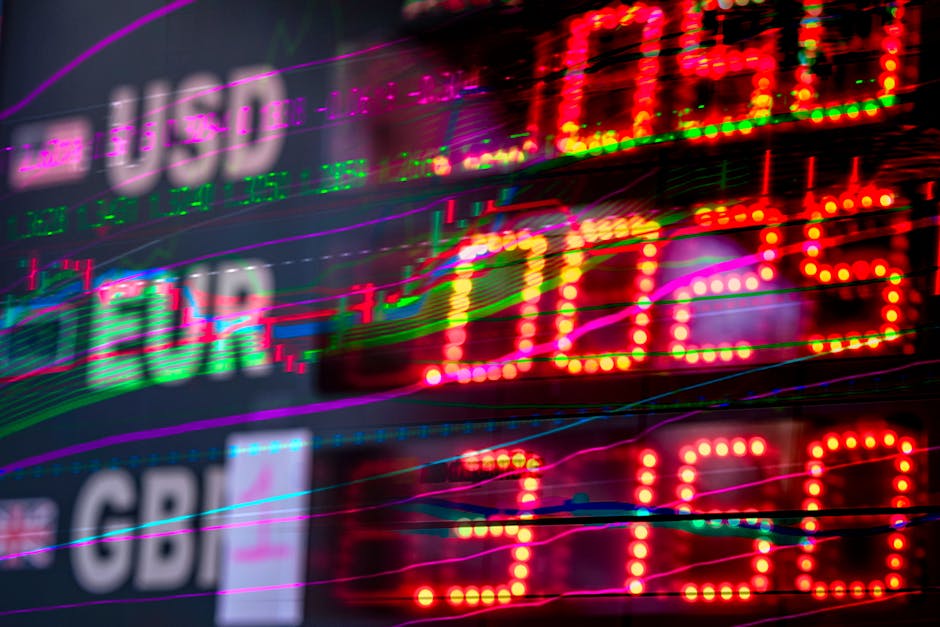
For example, in the currency pair EUR/USD, the Euro is the base currency and the US Dollar is the quote currency. If EUR/USD is trading at 1.0850, it means that one Euro can be exchanged for 1.0850 US Dollars. When you buy this pair, you are buying Euros and selling Dollars. When you sell this pair, you are selling Euros and buying Dollars.
This relationship between two currencies is the heart of every forex trade. The price of a currency pair constantly moves up and down based on economic data, interest rate decisions, political events, and market sentiment. Traders aim to profit from these price movements by predicting which direction the exchange rate will move.
The Three Main Categories of Currency Pairs
Currency pairs are typically grouped into three main categories: major pairs, minor pairs, and exotic pairs. Each category has different characteristics in terms of trading volume, volatility, and spread costs.
Major pairs are the most traded currency pairs in the world. They all involve the US Dollar as either the base or quote currency. Some of the most well-known major pairs include:
- EUR/USD — Euro vs. US Dollar
- GBP/USD — British Pound vs. US Dollar
- USD/JPY — US Dollar vs. Japanese Yen
- USD/CHF — US Dollar vs. Swiss Franc
- AUD/USD — Australian Dollar vs. US Dollar
Minor pairs, also called cross pairs, do not include the US Dollar but involve other major currencies such as the Euro, Pound, or Yen. Examples include EUR/GBP, EUR/JPY, and GBP/JPY. Exotic pairs combine one major currency with the currency of a smaller or emerging economy, such as USD/TRY or EUR/ZAR. Exotic pairs tend to have wider spreads and higher volatility, making them more challenging for beginners.
How Currency Pair Prices Are Quoted
When you look at a currency pair price, you will typically see two numbers: the bid price and the ask price. The bid is the price at which the market will buy the base currency from you, and the ask is the price at which the market will sell the base currency to you. The difference between these two prices is called the spread, which represents the cost of making the trade.
Currency pairs are usually quoted to four or five decimal places. The smallest price movement in a currency pair is called a pip, which typically refers to a movement in the fourth decimal place. For example, if EUR/USD moves from 1.0850 to 1.0851, that is a move of one pip. Understanding pips is important because they are the standard unit used to measure profit and loss in forex trading.
Some pairs, such as those involving the Japanese Yen, are quoted to only two decimal places. A pip for USD/JPY would be a movement in the second decimal place. Always check how the specific pair you are trading is quoted so you can accurately calculate your potential risk and reward.
What Moves Currency Pair Prices?
Currency pair prices are influenced by a wide range of factors. The most significant of these include interest rate decisions made by central banks, economic data releases such as employment figures and inflation reports, and geopolitical events. When a country’s economy is performing strongly, demand for its currency tends to increase, which can push its value higher against other currencies.
Market sentiment also plays a major role. During periods of global uncertainty, traders often move money into currencies considered safe havens, such as the US Dollar, Swiss Franc, or Japanese Yen. This shift in demand can cause rapid and significant price movements in many currency pairs simultaneously.
Supply and demand ultimately determines the price of every currency pair. As a trader, your goal is to analyse these forces and make informed decisions about where prices might move next. This is why studying both fundamental analysis and technical analysis is valuable when learning to trade forex.
Choosing the Right Currency Pair to Trade
For beginners, starting with major pairs is generally recommended. These pairs have the highest liquidity, which means there are many buyers and sellers in the market at all times. High liquidity typically means tighter spreads, more predictable price behaviour, and easier order execution. EUR/USD and GBP/USD are two of the most popular choices for new traders.
It is also helpful to focus on a small number of pairs when you are starting out. Trying to follow too many pairs at once can be overwhelming and lead to poor decision-making. By concentrating on one or two pairs, you can get a deeper understanding of how those specific markets behave and what factors most influence their price movements.
As your experience grows, you may choose to explore minor or exotic pairs. Each pair has its own personality and behaviour patterns. The more time you spend studying and observing a pair, the better equipped you will be to trade it effectively.
Start Learning With a Risk-Free Demo Account
Understanding currency pairs is just the beginning of your forex education. The real learning happens when you start applying these concepts in a live trading environment. However, before risking any real money, it is always a smart idea to practise with a demo account where you can trade with virtual funds.
A demo account gives you the chance to explore currency pairs, test your strategies, and get comfortable with how the market works — all without any financial risk. You can observe how different pairs react to economic news, practise reading price quotes, and build confidence at your own pace.
At ZenithFX.com, opening a free demo account takes only a few minutes. You will have access to a full range of currency pairs and professional-grade trading tools that mirror real market conditions. There is no better way to put your new knowledge into practice. Take the first step today and open your free demo account at ZenithFX.com — no deposit required, no pressure, just learning.
🎓 Free Forex Education at ZenithFX
Access our full learning center — forex basics, advanced strategies, video tutorials, and live webinars. All completely free.
Leave a comment